

On most blocks that means porch after porch of brick fronts, a few three-story apartment blocks with galleried porches, the GRTC Pulse on Broad Street at the north edge and Carytown's shops a few blocks south.
Where is the Museum District?
The Museum District sits in the City of Richmond, the capital of the Commonwealth of Virginia, west of the Boulevard (now Arthur Ashe Boulevard), with the Fan on the other side.
Its historic district takes its name from that eastern edge: the National Register calls it the West of the Boulevard Historic District, roughly bounded by Colonial Avenue, West Grace Street, Cutshaw Avenue, Thompson Street and Ellwood Avenue. The Museum District Association, the neighborhood's civic group, uses "Museum District" as the everyday name.
The neighborhood shares ZIP 23221 with Carytown, the shopping strip on West Cary Street just south of Ellwood Avenue. They are different places: Carytown is the commercial street, and the Museum District is the grid of houses north of it. So a 23221 address alone won't tell you which one you're in.
What is the history of the Museum District?
Most of the neighborhood came into the City from Henrico County by annexation in 1906, according to the Museum District Association. Building had started earlier, in the 1890s, after the electric streetcar raised land values. The oldest houses, from about 1890 to 1895, are on Grove and Ellwood avenues.
The Virginia Department of Historic Resources says the area was laid out on former farmland and built up quickly from 1895 to 1943, with most buildings from 1910 to 1930. It counts about 69 blocks and more than 1,700 contributing buildings. The district was listed on the Virginia Landmarks Register on December 8, 1993, and on the National Register on March 7, 1994 (reference 94000153). Two smaller districts sit inside it: English Village and the 2900 block of Grove Avenue.
So most houses you'll tour here are about a century old. Before you plan exterior work, read the historic review section below.
What is it like to live in the Museum District?
Living in the Museum District in 2026 usually means a brick town house with a front porch, or an apartment in one of the three-story blocks. Some people live in a former school or hospital. Free museums and Carytown's shops are a few blocks off. Most homes predate 1940, about a third are owner-occupied, and you won't need a City parking permit.
What kind of housing is in the Museum District?
DHR describes the typical house as an attached two-story brick town house, usually with a front porch, mostly in a modified Georgian style, with Tudor, Craftsman and Mediterranean examples and some three-story apartment blocks with galleried porches.
Census figures back that up. In the four tracts that cover the neighborhood (406, 407, 408 and 409), about 61 percent of the 4,883 housing units were built in 1939 or earlier, according to the American Community Survey 2020 to 2024 five-year estimates. About half (51 percent) are in buildings of 2 to 9 units; detached houses are about 17 percent and attached single-family houses about 12 percent. The two northern tracts (406 and 407) lean toward apartments: about 22 percent of their units are in buildings of 10 to 19 units. Tracts 408 and 409 also take in Carytown, so read these as a guide to the mix, not a count of the neighborhood. Want a detached house? That's about one unit in six here; most homes share walls or a building.
Do more people rent or own in the Museum District?
Most people rent. Across the four tracts, about 34 percent of the 4,662 occupied homes are owner-occupied and 66 percent are rented (ACS 2020 to 2024). Margins of error run from about plus or minus 52 to 103 owner households per tract, so the split is approximate. If you're buying, expect most of your neighbors to be renters.
Where do you park in the Museum District?
On the street, without a City permit. The Museum District is not one of the City's five restricted parking districts, which include the Fan to the east, so there is no resident decal to buy as of October 2026. Near Cary Street, free parking on Cary and its side streets is limited to three hours, according to the Carytown Merchants Association; read the signs on your block. VMFA runs its own parking deck, open 7 a.m. to 7 p.m. Saturday through Tuesday and until 10 p.m. Wednesday through Friday. Free curbside parking is the upside here; if you live close to Cary Street, the three-hour limit is the sign to watch.
Do Museum District homes need historic review?
The City's Commission of Architectural Review lists Monument Avenue among its Old and Historic Districts, and Monument runs through the neighborhood, so exterior changes on that street need its approval. The rest of the neighborhood is in the National Register district. Check the City's historic district map for your address before exterior work. Our historic district renovation guide explains the City's review process.
How do you get around the Museum District?
The GRTC Pulse runs along Broad Street at the neighborhood's north edge. GRTC labels its Scott's Addition station as the Museum District stop and the Science Museum station as the Museum stop, both on the same line between Willow Lawn and Rocketts Landing. The Allison Street station serves the Fan side. GRTC also runs local routes named for Grove and Patterson avenues. Check your block against both before you give up a car: the Pulse on Broad, and the Grove and Patterson routes.
What should newcomers to the Museum District know?
- City services come from the City. Taxes, trash, utilities and the Richmond Public Schools lookup are on our City of Richmond page.
- Carytown events draw crowds. The Carytown Watermelon Festival, in August, calls itself the largest one-day festival in Virginia. If you park on the street, plan around it.
- Older houses need older-house trades. Our directory lists plumbers, painters and roofers.
What are the best things to do in the Museum District?
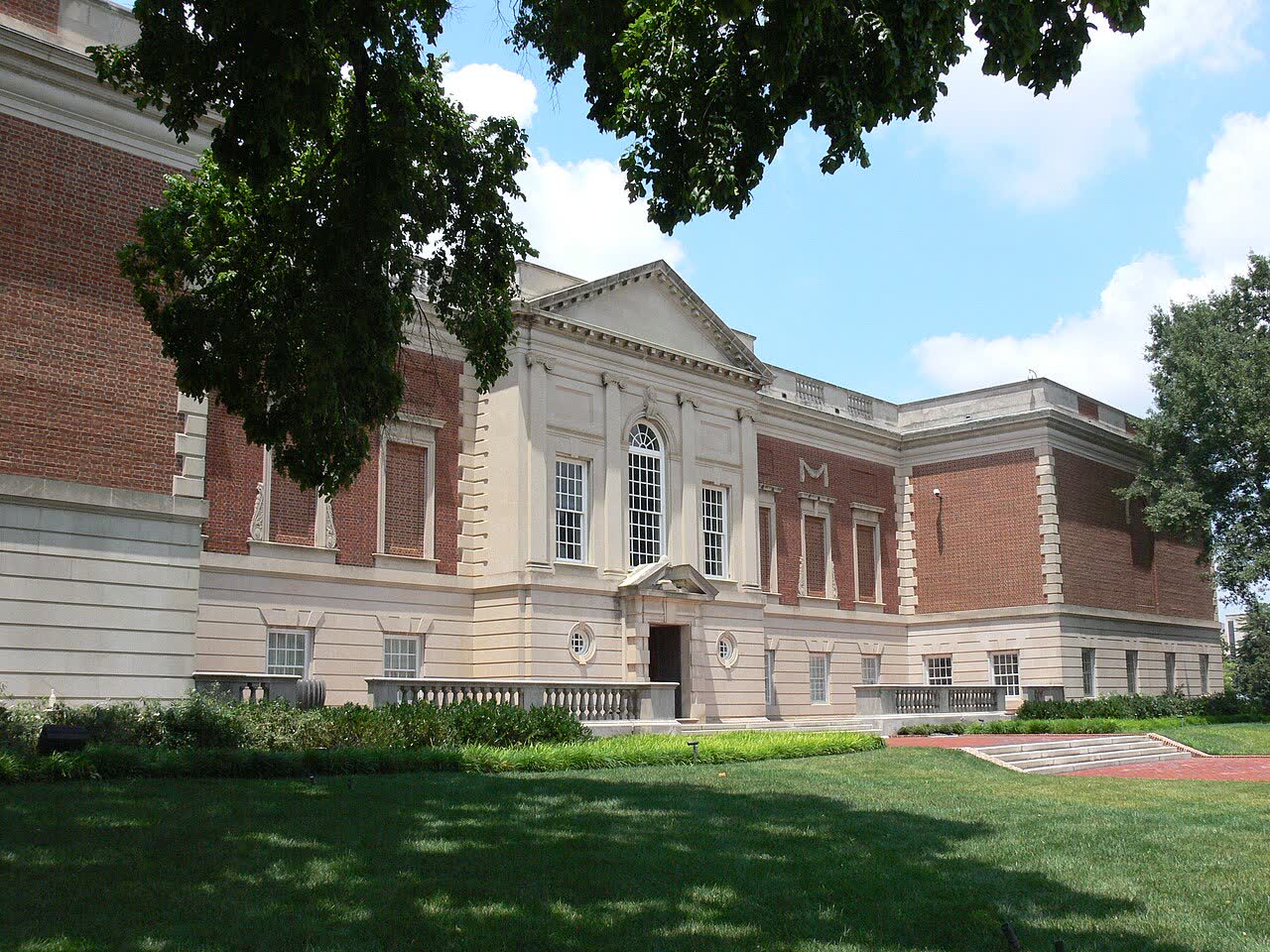
The best things to do in the Museum District start with its namesakes: the Virginia Museum of Fine Arts, with free general admission, and the Virginia Museum of History and Culture on the same edge of the neighborhood. Then walk Grove and Monument avenues and shop in Carytown to the south.
VMFA first. As of October 2026 it is open 365 days a year with free general admission, 10 a.m. to 5 p.m., and until 9 p.m. Wednesday through Friday. Some galleries are closed during an expansion and renovation project, so check what is on view before you go. The Virginia Museum of History and Culture, the former Virginia Historical Society, is a short walk away. After that, the houses on Grove and Monument are the show, and they're free too.
Where should you eat and drink in the Museum District?
Much of the neighborhood's food and coffee is in small storefronts tucked between houses, like the short commercial strip on North Sheppard Street between Patterson and Monument avenues, where B-Side Bakehouse moved into a permanent space in fall 2024 after starting as a pop-up in 2023, Richmond BizSense reported. VMFA has its own restaurant.
The places below were each checked against their own website on October 27, 2026. Nobody paid to be here, and the list is not ranked. Eating elsewhere in the region? See where to eat in Richmond, neighborhood by neighborhood.