
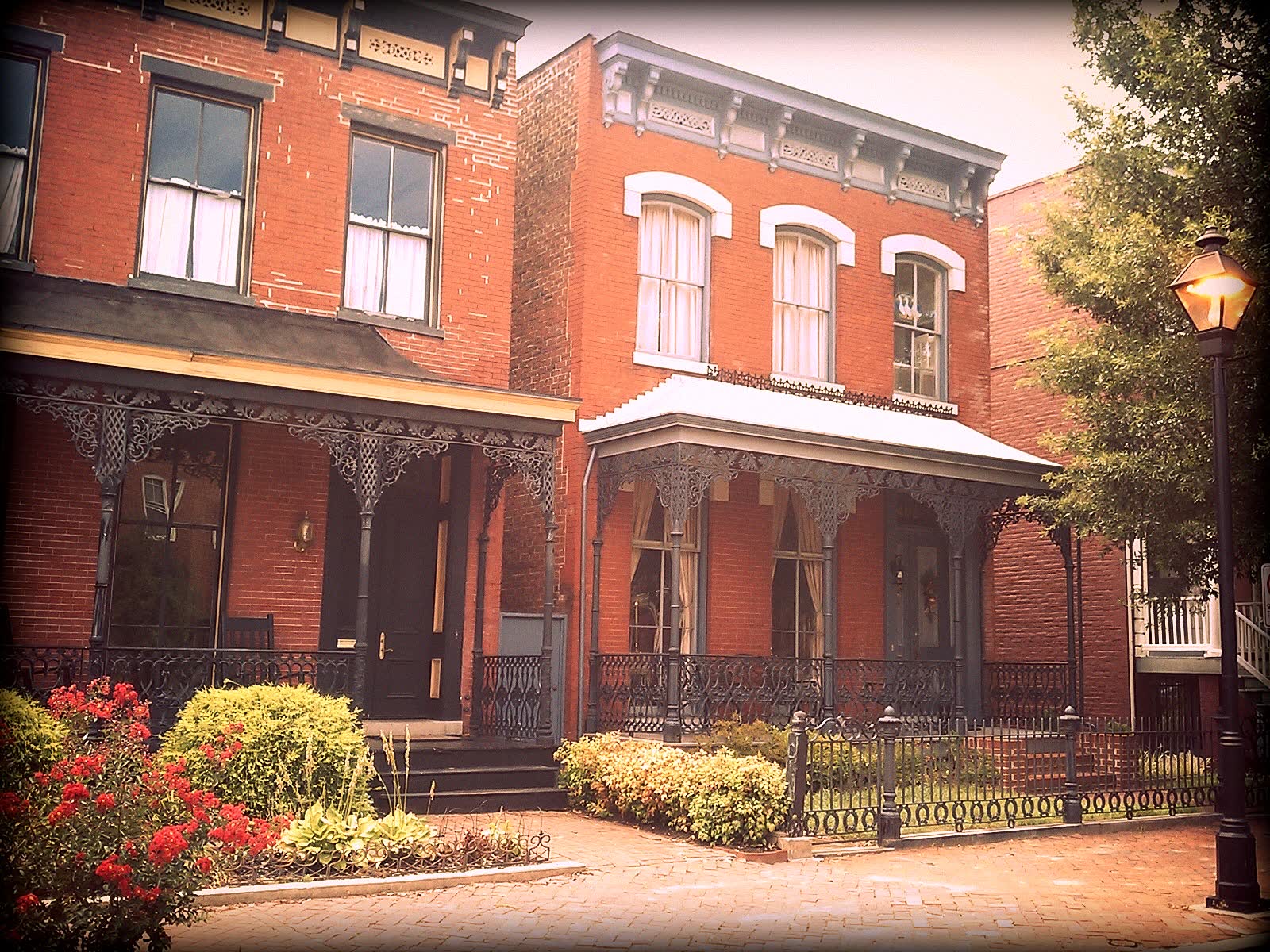

In the City of Richmond, exterior work you can see from the street on a building in one of the 44 City Old and Historic Districts needs a Certificate of Appropriateness from the Commission of Architectural Review (CAR) before you start, as of October 2026. Simple jobs like painting and porch repairs can get staff approval in 1 to 3 days. Commission review usually takes 30 to 60 days.
That's the short version, from the CAR's own homeowner manual. The rest of this guide covers where the districts are, which work needs what, the 2026 meeting calendar, what it costs and the state tax credit that pays back a quarter of eligible rehab costs.
A note on scope: the CAR is a City of Richmond body. Henrico and Chesterfield don't have it, so this guide applies only to addresses inside the city.
What is Richmond's Commission of Architectural Review?
The Commission of Architectural Review is the City of Richmond's official historic preservation body, set up by City Council in 1957. As of October 2026, it reviews every exterior change to buildings in the City's Old and Historic Districts and issues Certificates of Appropriateness for work it finds appropriate. Its nine members are appointed by City Council.
The CAR bases decisions on the Secretary of the Interior's Standards for Rehabilitation and on the City's Old and Historic Districts Handbook and Design Review Guidelines. Six members serve at large. Three come from nominees of the Richmond chapter of the American Institute of Architects, the Historic Richmond Foundation and the Richmond Association of Realtors, and at least one must live in an Old and Historic District.
Busy, but not a rubber stamp. In 2025 the Commission itself reviewed 98 applications. It approved 56 with conditions, 2 outright and 5 in part, deferred 17, denied 2 and gave 16 conceptual reviews. Staff approved another 118 administratively, according to the CAR's 2025 annual report. Conditions are the norm, so read them.
Which Richmond neighborhoods are in a City Old and Historic District?
As of October 2026, the City lists 44 Old and Historic Districts, from single buildings such as Linden Row and the Jefferson Hotel to neighborhood-sized districts. On the East End, the list includes the St. John's Church, Church Hill North, Union Hill and Chimborazo Park districts. Jackson Ward, Shockoe Slip, Shockoe Valley and Monument Avenue are districts too.
The neighborhood-scale districts on the City's list:
- East End: St. John's Church, Church Hill North, Union Hill, Chimborazo Park
- Downtown and Shockoe: Shockoe Slip, Shockoe Valley, Broad Street, Jackson Ward
- West of downtown: Monument Avenue, Franklin Street West, Grace Street West, Boulevard
- North and South: Hermitage Road, Springhill
Most of the rest of the 44 are individual landmarks, including St. Paul's, the Valentine Museum, Virginia House and Wilton.
Be careful with the Fan. "The Fan District" isn't on the City's list of Old and Historic Districts. Named districts such as Monument Avenue, Franklin Street West and Grace Street West do run through that part of the city, so two houses a block apart can fall under different rules. Look up your exact address on the City's interactive Old and Historic Districts map, linked from the CAR page. A house can also be in a state or national register district without being in a City district. Those listings matter for tax credits, but they don't trigger CAR review.
Living in Church Hill? Assume CAR review applies until the map says otherwise. In the Fan and the Museum District, it depends on the street, usually Monument Avenue. Our neighborhood pages say which blocks to check, and the City of Richmond page covers the rest of city life.
Which projects need a Certificate of Appropriateness in Richmond?
As of October 2026, exterior changes visible from a public street, alley or sidewalk need a Certificate of Appropriateness in a City Old and Historic District. Routine maintenance, repainting the same color and work not visible from the public right-of-way don't. Interior work doesn't go to the CAR at all, though it may still need a building permit.
What the CAR's homeowner manual says about the common jobs:
| Job | CAR position (as of October 2026) | Approval route |
|---|---|---|
| Painting | No approval to repaint the same color. Unpainted masonry may not be painted. Overly saturated, fluorescent or black colors are generally not appropriate | Staff can approve a color change |
| Windows | Repair originals; replace only if beyond repair, matching design and dimensions. Wood or aluminum-clad wood is acceptable. Vinyl windows and trim wrap "will not be approved" | Storm windows by staff; replacements per staff guidelines or Commission |
| Siding | Repair in kind. Fiber cement may be approved on less visible walls, usually the sides and rear. On the main street-facing walls it's "generally inappropriate," though the Commission can consider it case by case | Staff or Commission |
| Roof | Replace in kind (slate, tile, metal). Changing the material needs Commission approval. Flat and hidden roof areas need no review | In-kind by staff |
| Fences | Front 4 feet max, side and rear 6 feet. No vinyl, chain link or exposed block. Simple flat, dog-ear or picket designs | Simple designs by staff; masonry piers or decorative designs by Commission |
| Additions | Allowed if smaller than the main building, compatible with it and set back, with the rear preferred | Commission |
| Demolition, new buildings | Full Commission review | Commission |
Separately, the manual says a building permit is required for window, siding and roof replacement inside the districts, even where those jobs wouldn't need one elsewhere in the city. So a historic-district roof job typically needs both a COA and a permit.
How long does CAR approval take, and when are the deadlines?
Staff approvals usually take 1 to 3 days and Commission approvals 30 to 60 days, per the CAR's homeowner manual as of October 2026. The Commission meets on the fourth Tuesday of each month at 3:30 p.m. at City Hall, 900 E. Broad St., and the third Tuesday in December. Applications are due about four weeks before each meeting.
The remaining 2026 meetings:
| Meeting | Application due |
|---|---|
| November 24, 2026 | October 30, 2026 |
| December 15, 2026 | November 27, 2026 |
The City's page lists all of 2026. Plan backward from the meeting: if you're aiming for spring work, an application in by late January lands on the February 24 agenda. A deferral, which happened 17 times in 2025, pushes you a month.
What staff can approve without a meeting, under Sec. 30-930.6 of the City zoning ordinance: painting, replacement doors, porch decking, new handrails and porch rails, porch roof replacement, exterior storm windows and doors, plus the other work types with posted staff guidelines (gutters, fiber cement siding, fences and gates, HVAC equipment, light fixtures, hardscaping, signage, windows, ADA access and tax-credit projects). Staff can't approve anything that requires public notice.
Ways to avoid a deferral:
- Submit a complete application. Incomplete ones aren't invoiced or scheduled. Staff will review drafts for completeness before the deadline.
- Register for the City's Online Permit Portal first. Fee invoices go there, and the agenda waits on payment.
- Bring nothing new to the meeting. The Commission won't accept new materials, revisions or redesigns at the meeting itself.
- For additions and new construction, meet staff early. The application asks for it.
Applications go by email to CAR staff (alex.dandridge@rva.gov, with the project address in the subject line) or through the City's OneDrive link. Staff phone: 804-646-6569. What you control: getting a complete application in by the due date, then paying the invoice.
How much does a Certificate of Appropriateness cost in Richmond?
Staff approvals and conceptual reviews are free, as of October 2026. Fees apply to new construction, including additions and accessory buildings, to changes to approved plans, to extensions of a COA and to full demolitions. The City invoices through its Online Permit Portal, and the application isn't scheduled until the fee is paid.
The CAR page refers to a fee schedule, but no dollar amounts appeared on it when we checked on October 27, 2026. Call Planning and Preservation at 804-646-6569 for the current amount before you budget.
A COA is good for one year. You can extend it one more year with a written request and the extension fee, which the City describes as a one-time charge for approved projects that haven't yet been permitted.
Budget for the work itself as well. Wood or aluminum-clad windows, slate in kind and hand-built fences usually cost more than the substitutes the CAR turns down. Get quotes from contractors who already work in the districts, and ask how many COAs they've been through. Our guide to hiring a general contractor in Virginia covers license class and contracts.
Can I get a tax credit for renovating a historic home in Richmond?
Yes, if the house qualifies. The Commonwealth of Virginia's Historic Rehabilitation Tax Credit returns 25% of eligible rehabilitation expenses as a state tax credit, and it's open to owner-occupied homes, as of October 2026. The building must be a certified historic structure, and the work must meet the Secretary of the Interior's Standards, reviewed in advance by the Virginia Department of Historic Resources.
The rules from DHR that matter for a homeowner:
- Eligible buildings: individually listed on the Virginia Landmarks Register, certified as contributing to a listed historic district, or certified as eligible for listing.
- Minimum spend for an owner-occupied home: at least 25% of the building's assessed value for local real estate tax, for the year before work began, spent within a 24-month period.
- All or nothing: if the overall project doesn't meet the Standards, no part of the credit can be claimed.
- Eligible costs are work on the building's structural components plus some soft costs, such as architect fees.
- Paperwork: a three-part application (Part 1 eligibility, Part 2 proposed work, Part 3 completed work), and an independent CPA review of expenses with Part 3.
- Using it: the state credit carries forward up to 10 years, with a $5 million cap per taxpayer per year.
The federal 20% credit applies only to income-producing buildings, so a rental row house may qualify for both, for 45% combined. A home you live in gets the state credit only.
Apply to DHR before the work starts. Credits depend on DHR approving the plan, and fixing unapproved work after the fact can cost more than the credit. DHR's Richmond office handles questions at 804-482-6097.
Hiring for the job? Start with how to hire home services in Richmond, browse general contractors in the directory, and if the house has original plumbing, read our guide to plumbing in Richmond's older houses.